
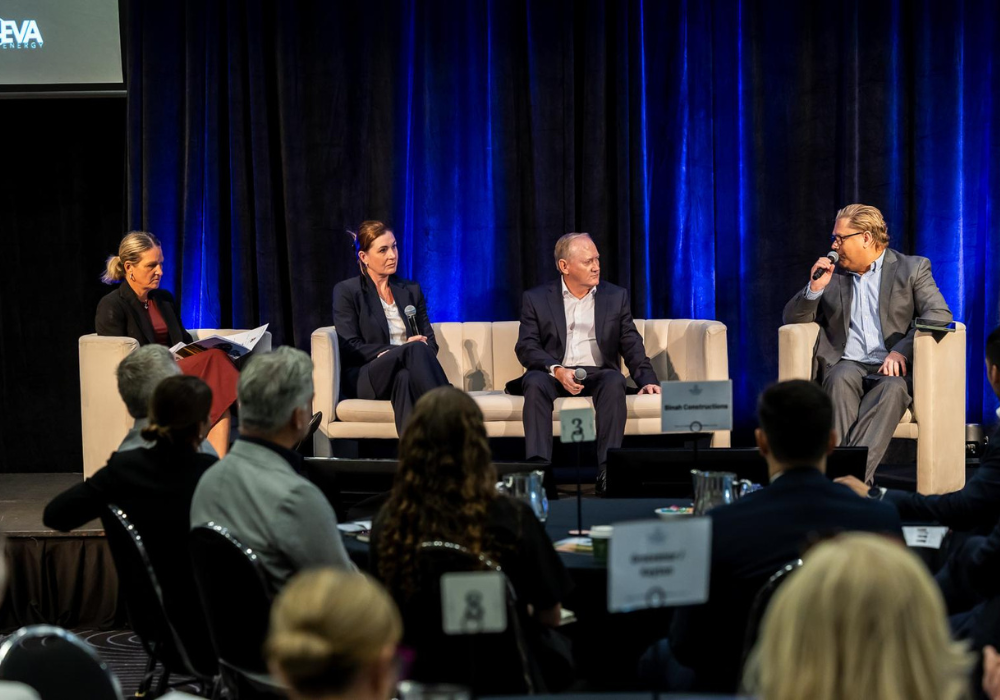
That was among the key themes Pariter CEO Tom Roche prepared to address at the Property Council of Australia’s NSW Retirement Living Forum on Thursday 5 November, where he joined industry leaders for the opening View from the Top panel discussion.
With Australia’s ageing population driving long-term demand for retirement accommodation, the sector faces an increasingly complex development environment. Rising construction costs, housing market uncertainty and evolving consumer expectations are creating challenges for new projects, despite the underlying need for more retirement living options.
For Tom, addressing these challenges requires a broader view of the housing market and a willingness to rethink how retirement communities are planned, funded and delivered.
A housing challenge that extends beyond retirement living
While demographic trends continue to support long-term demand for retirement accommodation, delivering new supply is becoming increasingly difficult.
Construction costs remain elevated, development feasibilities are under pressure and uncertainty in the residential property market is influencing the decisions of prospective residents.
But the challenge extends well beyond retirement living.
Housing supply, downsizing opportunities, home care and residential aged care are all interconnected. A shortage in one part of the system creates pressure elsewhere, limiting people’s ability to move into accommodation that better suits their changing needs.
Increasing the supply of retirement living accommodation can help older Australians downsize, potentially freeing up established family homes for other households. Equally, greater access to residential aged care can support transitions for people whose needs extend beyond independent living.
Addressing these challenges requires a more coordinated approach across government, housing and care sectors.
Unlocking supply through innovative partnerships
Despite current development pressures, Tom sees continued opportunities for investment in NSW, particularly through partnerships with established community organisations and recreation clubs.
Many clubs face similar long-term challenges, including ageing infrastructure, increasing operating costs and the need to diversify revenue to secure their financial future.
For Pariter, these challenges present an opportunity to work collaboratively with landowners to unlock underutilised land while preserving and strengthening important community assets.
As a developer, investor, owner and operator, Pariter brings together capital, development expertise and a long-term operational perspective to create sustainable outcomes for partners and communities.
This approach is demonstrated through Salus Cumberland in Western Sydney, developed in partnership with Cumberland Country Golf Club, and Salus Mingara on the Central Coast, in partnership with Mingara Leisure Group.
Both projects reflect a commitment to creating retirement living communities connected to established recreational and social infrastructure, while supporting the long-term sustainability of valued local organisations.
Changing expectations require new approaches
The needs and expectations of prospective retirement living residents are also evolving.
While lifestyle, amenity and community connection remain important, access to future care is increasingly influencing purchasing decisions.
For many older Australians, the ability to remain in familiar surroundings as their needs change is a significant consideration, particularly for couples who may require different levels of support.
This is placing greater emphasis on the relationship between independent retirement living, home care services and residential aged care.
At Pariter, planning for future care needs is an important consideration in the development of new communities, with co-located or adjacent aged care forming part of the approach.
Beyond physical design, the sector will also need to consider how additional services can be delivered, funded and integrated into retirement communities as residents increasingly seek to age in place.
Rethinking traditional retirement living models
Changing market conditions are also prompting important questions about the financial structures traditionally associated with retirement living.
For prospective residents, the decision to downsize can be complicated by uncertainty around the value of their existing home, future capital growth and the financial implications of moving into a retirement community.
Traditional deferred management fee structures may not suit every resident or market environment.
Tom believes the sector has an opportunity to explore greater flexibility in contractual arrangements and consider alternative models that better respond to changing consumer circumstances.
For developers and operators, this will require balancing commercial sustainability with the need to provide greater choice, clarity and confidence for prospective residents.
Preparing for the next generation of retirement living
Looking ahead, Tom believes the sector is entering a period of significant change.
From evolving care models and consumer expectations to emerging technologies and new commercial structures, retirement living operators will need to build resilience and remain adaptable.
Technology and artificial intelligence may create opportunities to improve operational efficiency, maintenance, information accessibility and resident services. However, the personal connections that underpin successful retirement communities must remain central to the experience.
For Pariter, the future lies in combining innovation with a long-term commitment to people, partnerships and place.
As the sector responds to growing demand and changing expectations, the opportunity is not simply to deliver more retirement accommodation, but to create communities that are better connected, more adaptable and designed to support people throughout later life.
Through long-term partnerships and an integrated approach to development, investment, ownership and operations, Pariter is committed to helping shape that future, side by side with the organisations and communities it serves.
.png)

